Choosing the 2026 best cargo storage containers requires more than comparing prices or polished product photos. In practice, container performance depends on load type, placement, climate, access frequency, and handling equipment. A steel unit may protect boxed tools beside a coastal warehouse, yet condensation can damage contents without airflow and moisture control. That detail is easy to overlook. This guide examines build quality, door seals, floor strength, lock compatibility, ventilation, stackability, and supplier support. Each factor affects safety, durability, and operating cost.
The evaluation focuses on reputable specifications, practical use, and evidence that buyers can verify before ordering. We consider common sizes, internal clearances, payload guidance, delivery conditions, and inspection records. A container that looks robust may still have worn hinges, uneven flooring, or poor drainage. Small faults matter. We will compare cargo storage containers for construction sites, warehouses, farms, retailers, and temporary project storage, without assuming one design fits every application. Some recommendations may remain conditional because regional weather, transport access, and local safety requirements vary. That is a limitation, not a weakness to hide. Readers should confirm dimensions, certifications, warranty terms, and site suitability with qualified suppliers. The goal is a practical 2026 shortlist: clear enough for a purchase decision, cautious enough to prevent expensive surprises.
Choosing the best cargo storage container in 2026 starts with measurable standards, not appearance. ISO 668 defines Series 1 container dimensions, including the common 20-foot unit at 6.058 metres long and 2.438 metres wide. A standard 40-foot container measures 12.192 metres long. High-cube versions normally provide 2.896 metres of external height, compared with 2.591 metres for standard units.
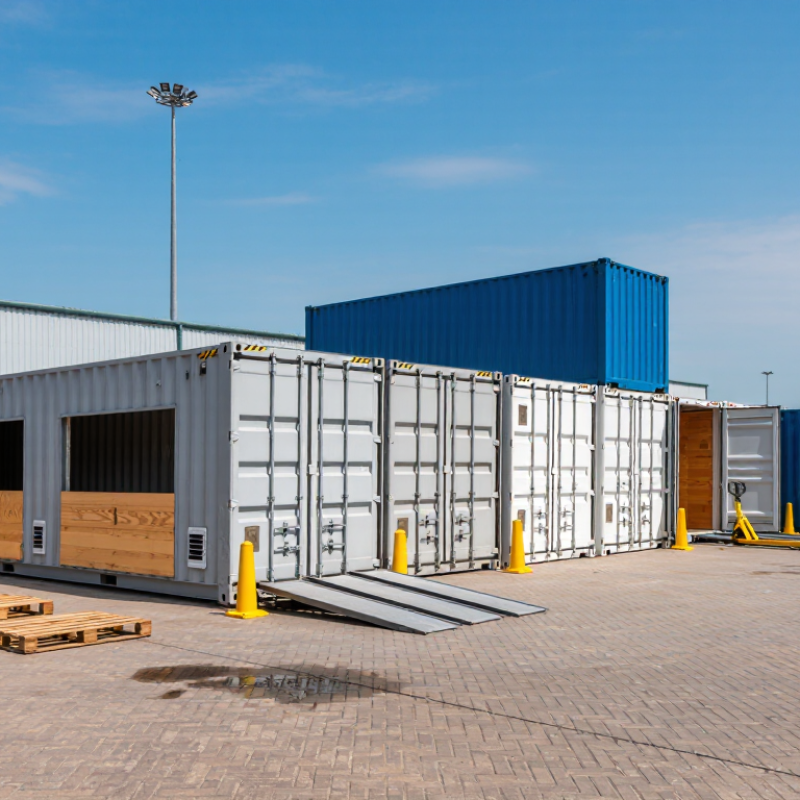
General-purpose containers suit boxed cargo and equipment. High-cube containers add valuable vertical clearance. Open-top designs help load tall machinery, while flat racks support oversized cargo with removable end structures. Dimensions alone can mislead. Door openings, internal corner posts, floor strength, and usable volume still require physical checking.
The Convention for Safe Containers requires an approved safety plate, structural examination, and periodic inspection. A valid CSC plate records maximum gross mass, stacking load, and racking test values. These details matter when a loaded unit is lifted, stacked, or transported internationally. The 2024 UNCTAD Review of Maritime Transport reported global container port throughput of about 858 million TEUs in 2023, showing the scale of equipment movement. The World Shipping Council also emphasizes verified container safety and handling practices across the supply chain.
A clean exterior is not proof of safety. I would inspect corner castings, roof bows, door seals, floor damage, and corrosion before selecting any unit. Storage needs can expose a weakness that a catalogue never shows. Sometimes, the “best” container is simply the one whose dimensions, condition, and CSC documentation match the actual load.
What Are the 2026 Best Cargo Storage Containers?
The best container depends on volume, access, and the weight of your cargo. A standard 20-foot unit usually provides about 33 cubic meters of internal space. It suits compact machinery, boxed stock, and short-term site storage. A 40-foot unit offers roughly 67 cubic meters, giving pallets more room to breathe. However, floor loading and door clearance still limit practical use.
For larger, lighter cargo, a 40-foot high-cube container can reach approximately 76.4 cubic meters. Its extra height helps with tall crates, stacked cartons, and bulky furniture. The additional vertical space sounds impressive. It can also encourage unsafe overstacking. Keep aisles clear, distribute weight evenly, and check the internal dimensions before ordering.
In my storage planning experience, the largest unit is not always the best choice. I once allowed enough volume but overlooked turning space for handling equipment. That mistake slowed loading and increased manual work. Container dimensions also vary slightly by construction and manufacturer, so published capacity should be treated as a guide. Measure your largest item, add packing clearance, and compare usable floor area with total cubic volume. A 20-foot container may be more efficient when access is tight, while a high-cube unit offers better flexibility for volume-sensitive storage.
What Are the 2026 Best Cargo Storage Containers?
Material ranking should begin with ISO 1496-1 testing, not appearance. The standard examines stacking, lifting, floor strength, wall resistance, and dimensional safety. A practical inspection should include loaded corner posts, welded joints, door alignment, and floor deflection. Steel remains the strongest choice for repeated handling. Aluminium reduces weight, but it needs closer inspection around impact points and fasteners.
Corrosion resistance separates a durable container from a cheap enclosure. The World Steel Association reports that corrosion costs economies roughly 3.2% of global GDP annually, showing why coating quality deserves serious attention. Weathering steel can protect itself after surface oxidation, but trapped moisture still attacks floors and seams. Look beneath the plywood, especially near door thresholds. That small area often tells the truth.
Service life is difficult to promise. Industry leasing data commonly places working container life near 10 to 15 years, while controlled storage can extend it beyond that range. The Container Owners Association recommends regular checks for corrosion, structural damage, and water ingress. A 2026 specification should therefore record coating thickness, weld quality, drainage, and repair history. ISO testing proves capability, not immortality. That distinction matters. Some evaluations also overlook local humidity, salt exposure, and forklift impacts. I would not ignore those variables, even when the inspection certificate looks perfect.
Material ranking based on ISO 1496 performance requirements, corrosion resistance, structural durability, maintainability, and expected service life
| Rank | Container Material System | Typical ISO 1496 Configuration | Structural and Test Performance | Corrosion Resistance | Expected Service Life* | Maintenance Profile | Best-Fit Cargo Use | Overall Assessment |
|---|---|---|---|---|---|---|---|---|
| 1 |
Weathering steel body with marine-grade protective coating Commonly used with steel corner fittings, cross-members, and hardwood or engineered flooring |
ISO 1496-1 general-purpose freight container design; normally available in 20-foot and 40-foot formats | Excellent load-path continuity and resistance to racking, stacking, lifting, and restraint forces when manufactured and inspected to the applicable ISO requirements |
High Weathering steel reduces atmospheric corrosion progression, while surface preparation, primer, topcoat, and sealed joints provide the main protection |
15–25 years in ordinary service; longer with controlled exposure and scheduled coating repairs | Inspect roof seams, corner fittings, door gaskets, underfloor areas, and coating damage at least annually; repair exposed steel promptly | General cargo, machinery, packaged goods, construction storage, and repeated transport cycles | Best overall balance of structural strength, availability, repairability, and life-cycle cost |
| 2 |
Galvanized high-strength steel Zinc-coated structural panels and members with sealed or painted exterior joints |
ISO 1496-1-compatible cargo body where dimensional, lifting, stacking, and restraint requirements are verified | Very good stiffness and impact resistance; performance depends on coating integrity, weld quality, and the verified design load rating |
High Zinc provides sacrificial protection, but cut edges, weld zones, trapped moisture, and damaged areas still require treatment |
15–25 years, subject to coating thickness, chloride exposure, drainage, and maintenance quality | Check white rust, red rust, fasteners, welds, and drainage paths; avoid prolonged contact with standing water and corrosive cargo residues | Coastal storage, agricultural equipment, industrial parts, and cargo requiring strong steel walls | Strong corrosion-performance option where galvanizing quality and joint protection are documented |
| 3 |
Aluminum alloy body with steel corner fittings Aluminum side and roof panels combined with a steel load-bearing frame |
ISO 1496-1 compliance requires verification of the complete mixed-material structure, including galvanic isolation details | Good strength-to-weight ratio and reduced tare mass; generally less resistant to severe dents and localized impact than a comparable steel body |
High Naturally protective oxide film performs well, but galvanic corrosion may occur where aluminum contacts unprotected steel in wet or salty conditions |
15–25 years in suitable environments; shorter if galvanic interfaces, fasteners, or impact damage are neglected | Inspect dissimilar-metal joints, fasteners, sealants, panel dents, and damaged anodized or painted surfaces | Weight-sensitive transport, mobile storage, dry goods, and applications where corrosion exposure is significant | Best weight-saving choice when galvanic isolation and impact protection are properly engineered |
| 4 |
Stainless steel cargo container Austenitic stainless panels or frame sections, commonly combined with reinforced structural members |
Can be designed for ISO 1496-1 load and handling requirements; the material alone does not establish compliance | Very good durability and impact resistance; welding procedure, heat-affected zones, and structural detailing strongly influence final performance |
Very high Excellent resistance to many atmospheric and chemical environments, but chloride pitting and crevice corrosion remain possible |
25–40 years in well-controlled service; severe chloride, chemical, or poorly drained conditions can reduce this range | Remove salt and chemical deposits, keep crevices drained, and inspect welds and dissimilar-metal connections | Food-related logistics, chemical-compatible storage, marine environments, and high-hygiene applications | Best durability potential, although the higher material and fabrication cost may not suit ordinary cargo storage |
| 5 |
Glass-fiber-reinforced polymer composite Composite panels with a separate metal frame and mechanical or bonded joints |
ISO 1496-1 structural performance must be demonstrated for the complete container; panel material alone is not sufficient | Good resistance to dents and many chemicals; long-term creep, joint strength, UV exposure, and fire performance require project-specific verification |
High Does not rust, but moisture can affect cores, fasteners, interfaces, and the supporting metal frame |
15–30 years, depending on resin system, UV stabilizers, impact history, joint design, and environmental exposure | Inspect delamination, cracks, water ingress, UV degradation, fasteners, seals, and the corrosion condition of the metal subframe | Stationary storage, temperature-sensitive enclosures, corrosive atmospheres, and applications requiring low external maintenance | Promising specialized option where low rust risk outweighs the need for detailed composite inspection |
| 6 |
Painted carbon steel Conventional structural steel with primer and external protective coating |
Suitable only when the complete design has been verified against the relevant ISO 1496-1 tests and dimensional requirements | Very good initial strength and weldability; exposed scratches, poor drainage, and unsealed seams can rapidly reduce durability |
Medium Performance depends heavily on surface preparation, coating system, film thickness, edge coverage, and repair frequency |
10–20 years in ordinary service; potentially less in coastal or high-humidity environments without regular recoating | Frequent inspection of scratches, welds, roof edges, floor supports, door thresholds, and internal condensation zones | Budget-sensitive storage, short-to-medium-term projects, protected yards, and low-corrosion inland environments | Cost-effective but maintenance-dependent; not the preferred choice for long-term marine exposure |
Technical note: ISO 1496-1 specifies minimum requirements and test methods for general-purpose freight containers, including lifting, stacking, floor, wall, roof, end-wall, and racking performance. Actual compliance must be confirmed through design documentation, inspection records, and applicable certification. Service-life figures are practical planning ranges rather than guaranteed warranties. Exposure to salt spray, standing water, chemicals, temperature cycling, cargo impact, poor drainage, and deferred maintenance can significantly shorten service life.
The best cargo storage containers balance security, airflow, and realistic payload capacity. A 28,750 kg payload is a ceiling, not a default operating target. The container’s tare weight, floor strength, lifting equipment, and transport limits all affect the usable load. Heavy machinery may need reinforced flooring and evenly distributed weight. Uneven loading can deform doors or create dangerous pressure points.
Security begins with strong door hardware, concealed hinges, and a protected locking area. Inspect the frame for gaps, corrosion, or weakened welds. Ventilation also matters, especially when cargo changes temperature during storage. Small screened vents can reduce condensation while limiting dust and pest entry. However, ventilation alone cannot solve moisture problems. Dry packaging and regular inspections remain necessary.
Tips: Check the data plate before loading. Confirm the gross weight rating with a qualified inspector. Leave airflow around sensitive cargo. Use restraints that match the load, not just the container size. A simple floor plan helps prevent concentrated weight. Photograph the container before use. I once overlooked a minor door misalignment, and it became a costly warning after rain entered. Small defects deserve attention.
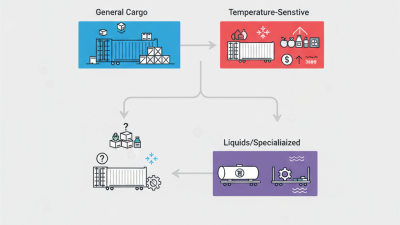
The best 2026 cargo container depends on the cargo, climate, budget, and compliance risk. Dry, boxed goods usually suit standard steel units with sound floors and doors. Machinery may need open-top access, while temperature-sensitive products require verified refrigeration performance. UNCTAD’s Review of Maritime Transport 2024 recorded global maritime trade at about 12.3 billion tonnes in 2023. That scale increases pressure on capacity, inspection, and reliable equipment selection.
Climate changes the decision. In humid ports, inspect door gaskets, roof seams, and interior corrosion before loading. In cold regions, check insulation, power connections, and temperature-recording systems. A 2024 report from the World Meteorological Organization confirms that extreme weather risks are intensifying, although container planning still often treats climate as an afterthought. That is a costly mistake. Short routes may justify a refurbished unit, but long voyages need stronger floors, recent structural inspection, and clear maintenance records.
Cost is more than the purchase or rental rate. Compare transport, handling, cleaning, repairs, energy use, and possible cargo loss. Containers should match ISO 668 dimensions and carry valid safety approval under the International Convention for Safe Containers. Verify the plate, inspection status, maximum gross mass, and owner documentation. UNCTAD’s data shows how disruptions can quickly affect schedules and freight availability. I would not select the cheapest unit without checking those details. It may look economical at the depot. The final invoice can disagree.