Top 10 Benefits of Using Cargo Shipping Containers for Your Business?
In recent years, cargo shipping containers have gained immense popularity among businesses. These versatile containers serve various purposes, making them essential in the modern supply chain. They are commonly used for storage, transport, and even repurposing into offices or retail spaces.
Using cargo shipping containers offers businesses numerous advantages. For instance, they provide a cost-effective solution for inventory management. Additionally, their durability ensures that goods remain safe during transit. However, some enterprises might overlook the potential of these containers, thinking they require more infrastructure than they actually do.
Businesses should be aware of the importance of proper maintenance and utilization of cargo shipping containers. A well-maintained container can last years, while neglect can lead to costly repairs. By prioritizing this aspect, companies can fully leverage the benefits these containers have to offer.

Benefits of Cost Efficiency in Utilizing Cargo Shipping Containers
Using cargo shipping containers can greatly benefit businesses by enhancing cost efficiency. These containers are durable and designed to protect goods during transportation. They are often cheaper than traditional shipping methods. This can lead to significant savings over time. Additionally, containers are reusable, which further contributes to lowering costs.
Tips: Consider buying second-hand containers. They are often in good condition and can be much less expensive. Think about customizing your containers for specific needs. This can optimize your logistics and potentially increase your profit margins.
Moreover, cargo containers save on storage costs. They can be stacked and organized easily. This allows businesses to maximize their warehouse space. However, ensuring proper maintenance of containers is vital. Any neglect might lead to damages and additional expenses. Regular checks can prevent costly repairs in the long run.
Top 10 Benefits of Using Cargo Shipping Containers for Your Business
This chart illustrates the top benefits of utilizing cargo shipping containers for businesses, highlighting cost efficiency, flexibility, durability, security, and eco-friendliness.
Enhanced Security Features of Cargo Shipping Containers for Businesses
Cargo shipping containers offer improved security features that benefit businesses significantly. They are built from strong materials, providing durability. The lock systems are designed to be tamper-proof, ensuring safety for cargo. Additionally, containers can be easily secured in various locations, minimizing risks of theft. Business owners can trust that their goods are well protected while in transit.
Moreover, many containers come with tracking technology. This allows for real-time updates on location and condition, enhancing visibility. Knowing where your shipment is builds confidence and peace of mind. Sometimes, however, companies overlook the importance of routine inspections. Failure to check for damage can lead to loss of products.
Containers, when utilized correctly, lower insurance costs. This happens due to their robust nature and security features. It’s crucial to choose the right container for specific needs. Some may offer less protection if not appropriately sized or rated. Ignoring this can result in potential vulnerabilities. Overall, cargo containers play a vital role in securing assets for businesses.
Top 10 Benefits of Using Cargo Shipping Containers for Your Business - Enhanced Security Features of Cargo Shipping Containers for Businesses
| Benefit |
Description |
| Enhanced Security |
Cargo containers are designed to be secure, protecting goods from theft and damage. |
| Durability |
Made from strong steel, containers can withstand tough conditions and are resistant to weather damage. |
| Cost-Effectiveness |
Using containers can be more economical compared to traditional shipping methods. |
| Versatility |
Containers can be used for various purposes, from storage to transportation of different items. |
| Mobility |
Containers are easy to transport, allowing flexibility in shipping logistics. |
| Eco-Friendly Options |
Some containers are made from recycled materials or can be repurposed, reducing environmental impact. |
| Weather Resistance |
Containers are built to withstand rain, wind, and extreme temperatures. |
| Customizable |
Containers can be modified for specific storage or shipping needs, including added security features. |
| Space Efficiency |
Containers maximize space usage and can be stacked to save room in shipping yards and warehouses. |
| Rapid Deployment |
Containers can be quickly set up and put into service, improving operational efficiency. |
Versatility: Innovative Uses of Cargo Shipping Containers Across Industries
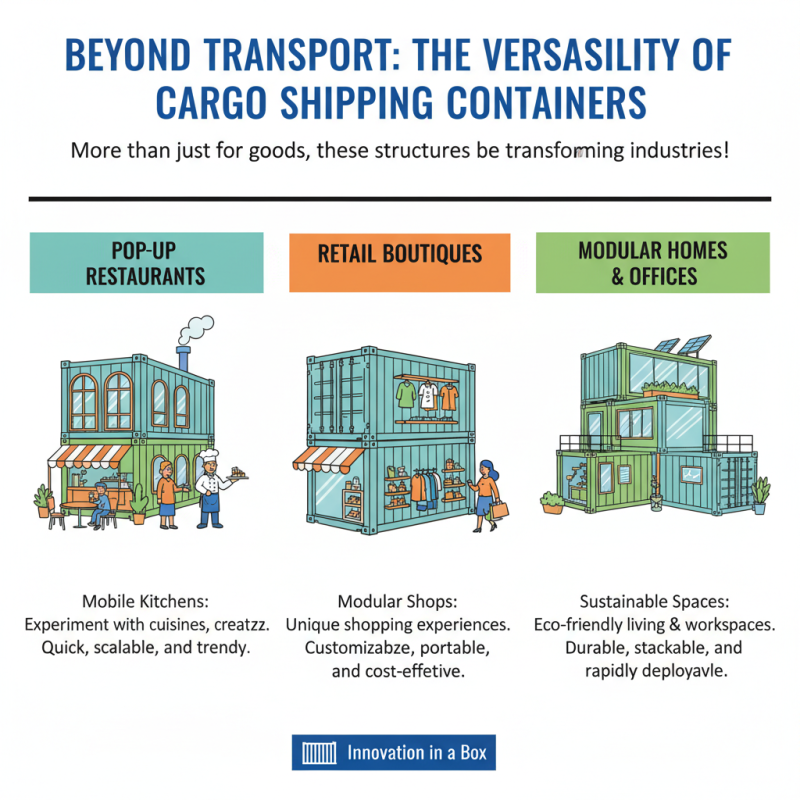
Cargo shipping containers are highly versatile structures that can serve various purposes across different industries. They are not just for transporting goods anymore. Many businesses now repurpose these containers into unique spaces. For example, restaurants can transform containers into trendy pop-up kitchens. These mobile kitchens allow chefs to experiment with different flavors and cuisines, creating excitement among customers.
In the construction sector, containers are being used as modular offices or even homes. They can be stacked to save space and are easily customizable. This innovation can lead to cost savings but might also present challenges in design and functionality. Ensuring proper insulation and amenities is vital. Additionally, the aesthetic appeal of converted containers can sometimes be lacking. Companies must balance practicality and visual attractiveness. It raises questions about sustainability too. Using containers might reduce waste, but what happens when they are no longer needed?
The creative potential of cargo containers is impressive. However, with innovation, there comes a responsibility to reflect on impacts. Are we truly maximizing their benefits, or are we neglecting important factors? As industries continue to embrace this trend, the importance of thoughtful design and long-term use will grow. Each solution needs careful consideration beyond immediate appearances.
Sustainability and Environmental Benefits of Using Shipping Containers
Using shipping containers for business operations presents significant sustainability benefits. They are primarily made from steel, a highly recyclable material. When businesses choose containers, they reduce the demand for new materials. This simple switch helps lower carbon emissions that come from manufacturing new products.
These containers often require minimal processing, which means less energy consumption. Repurposing old containers keeps them out of landfills. However, the challenge lies in ensuring these containers are maintained properly. Neglect can lead to corrosion and other issues. Businesses must regularly assess their containers’ conditions.
Moreover, using shipping containers can promote local sourcing. When businesses opt for local repairs, they support nearby economies. However, this may not always be feasible, depending on location. Urban areas might lack suitable services, forcing businesses to look further afield. It’s vital to weigh these factors. The environmental benefits are clear, but practical challenges remain.