When considering shipping container storage units, selecting the right one can be a daunting task. Experts in the field, like John Smith, a leading specialist in container solutions, emphasize, "Choosing the right storage unit is key to maximizing your space and security." This advice resonates as businesses and individuals alike seek efficient storage options.
The growing popularity of shipping container storage units arises from their versatility. They can be adapted for various needs, from residential to commercial uses. With options ranging from different sizes to customizable features, the choices can overwhelm. The wrong decision may lead to wasted space or unnecessary expenses.
Visualize a business needing to store equipment. They might choose a unit without considering the size requirements or location. Such mistakes highlight the importance of thorough planning. It's crucial to assess what you intend to store before making a choice. This assessment ensures that the selected shipping container meets all your storage needs efficiently.

When selecting a shipping container storage unit, it’s vital to understand the different types available. There are standard containers, refrigerated containers, and high-cube containers, each serving specific needs. Standard containers are versatile for general storage, while refrigerated ones maintain temperature for perishable goods. High-cube units offer extra height, perfect for bulky items.
Consider the environment where the container will be placed. Outdoor exposure may lead to rust, especially in coastal areas. Additionally, the container's size matters. You may underestimate your storage needs initially. It’s common to find oneself needing more space as time goes on.
Think about ventilation if you store items that are sensitive to moisture. Poor airflow can lead to mold, ruining your belongings. Security is another factor deserving attention. Some units come with enhanced locking mechanisms, offering peace of mind. Reflect on what you will store, and this will guide your choice.
When it comes to choosing the right shipping container storage units, assessing your space and storage needs is crucial. Start by measuring the area where you plan to place the container. Take note of any obstacles such as trees, fences, or buildings. Consider the container’s size carefully. A large unit may seem tempting, but it requires ample space for access and movement.
**Tips:** Think about what items you plan to store. Will they fit comfortably? Keep in mind the dimensions of your belongings. Heavy items may need a sturdy base. Remember, not all items should be stacked high.
Evaluate your long-term storage requirements. Are you storing seasonal items? If so, a smaller container may suffice. On the other hand, if you anticipate acquiring more goods, opt for a unit with extra space. Making adjustments later can be cumbersome.
**Tips:** Consider ventilation. Proper airflow can prevent mold and deterioration. Think about where the container's doors will face. Easy access is key. Plan for the unexpected; the perfect container today may not suit your needs tomorrow.
| Dimension | Standard Size (ft) | Volume (cubic ft) | Weight Capacity (lbs) | Ideal Use Cases |
|---|---|---|---|---|
| Small Container | 10 x 8 x 8.5 | 560 | 1,800 | Tool storage, small equipment |
| Standard Container | 20 x 8 x 8.5 | 1,165 | 4,400 | Furniture, household goods |
| High Cube Container | 40 x 8 x 9.5 | 2,694 | 6,700 | Larger items, equipment |
| Reefer Container | 20 x 8 x 8.5 | 1,165 | 4,400 | Perishable goods, food storage |
| Open Top Container | 40 x 8 x 8.5 | 2,694 | 6,700 | Heavy machinery, bulk items |
When selecting shipping container storage units, several key features are crucial for ensuring safety and usability. Look for quality materials. Durable steel constructions resist rust and corrosion. A survey by Container Technology, Inc. shows that containers made from corten steel can last up to 25 years with proper maintenance. This longevity is significant for anyone looking for reliable storage solutions.
Ventilation is another important aspect. Proper air circulation prevents moisture buildup. This is vital for items sensitive to humidity. Experts recommend units with built-in vents or windows. Ideally, a container should allow airflow while keeping pests out. A study from the Storage Association highlighted that up to 30% of stored goods face damage from poor ventilation.
Consider size and accessibility. Standard containers come in 20 or 40-foot lengths. Choose according to your storage needs and space availability. Remember, not all units provide easy access. Some locations may have limited entry points, making it difficult to load or unload items. A review noted that inadequate access can lead to frustration and wasted time during retrieval. Thus, assessing access routes and container dimensions is advisable before making a decision.
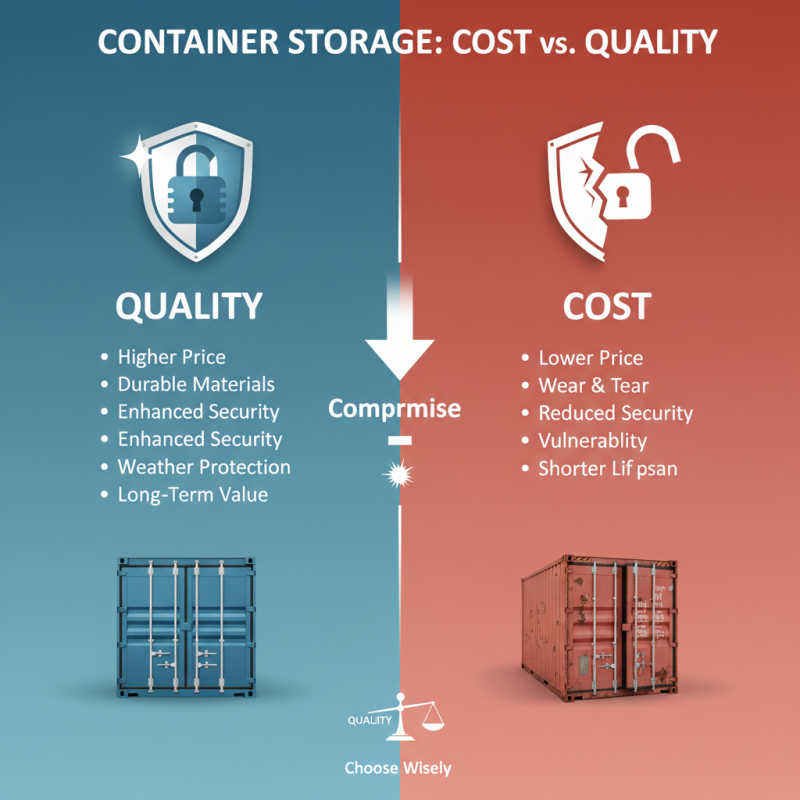
When evaluating container storage solutions, cost and quality are key factors. A lower price often comes with potential downsides. For example, cheaper units might show signs of wear and tear. This can compromise security and protection.
Quality containers are built to withstand harsh weather conditions. They may be more expensive upfront, but they provide long-term savings. Think about what you’re storing. Delicate items need more protection than rugged equipment. Spending a bit more could save you money on replacements.
It's also essential to consider delivery and setup costs. Sometimes, hidden fees may arise. This can affect your overall budget unexpectedly. Ask questions and analyze all factors. It’s not just about the price tag. Think about the whole experience and your specific storage needs.
When selecting a supplier for shipping container rentals, reliability is crucial. Start by researching potential suppliers. Look for reviews and testimonials. Genuine feedback can reveal important insights. Check their experience in the industry as well. Longevity often indicates stability and trustworthiness.
Tips: Ask for references from previous clients. Speaking directly to past customers can provide clarity. Understanding their experiences can guide your decision. Evaluate the condition of the containers offered. Inspect before committing. Well-maintained containers prevent future issues.
Consider the terms of rental agreements. Some suppliers may have hidden fees. Read the fine print carefully. Don't hesitate to ask questions. Clear communication is essential for a successful partnership. A reliable supplier should be responsive and transparent.