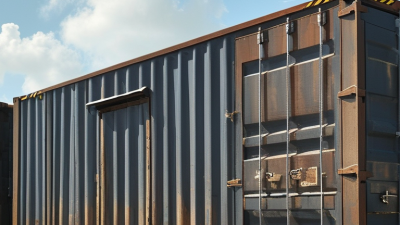
Choosing the right small shipping containers in 2026 requires more than comparing prices online. Buyers must examine dimensions, steel grade, door condition, ventilation, certification, and delivery distance. A container that looks inexpensive may become costly after inland transport, repairs, lifting, and customs handling.
UNCTAD’s Review of Maritime Transport 2024 reported that global maritime trade grew by 2.4% in 2023. It also expected further growth in 2024, despite rerouting, port congestion, and higher operating costs. The World Shipping Council continues to highlight equipment availability, safety, and supply-chain resilience as practical concerns. These findings matter for small shipping containers, especially when buyers need compact storage or short-distance cargo solutions.
Christian Roeloffs, co-founder and CEO of Container xChange, has observed, “The container market is a global market, and local events can have global consequences.” That warning deserves attention. A 10-foot unit may suit a narrow warehouse entrance, while a 20-foot unit usually offers better cost efficiency per cubic meter. Neither option is automatically best. It depends on cargo weight, loading equipment, destination infrastructure, and return plans.
This guide compares 2026 models for global buyers. It considers real-world handling, not just catalog specifications. Rust near the floor, damaged locking bars, and weak corner castings can change the decision quickly. Some buyers may still overvalue the lowest quotation. That is understandable, but incomplete. Reported market figures also vary by route and supplier, so every recommendation should be checked against current freight rates, inspection records, and local delivery conditions.

Small shipping containers are compact, enclosed units designed for limited cargo volumes, storage, or short-distance relocation. The common 10-foot container measures about 2.99 metres long and 2.44 metres wide externally, under ISO 668 dimensional standards. It offers roughly half the floor space of a 20-foot unit. That difference matters.
Households use small containers for apartment moves, renovation storage, and seasonal equipment. Small retailers may store cartons, tools, or exhibition materials near a port or warehouse. Exporters also consider them when cargo does not justify a larger unit. UNCTAD’s Review of Maritime Transport 2024 recorded approximately 858 million TEUs in global container port throughput during 2023. This scale shows the strength of container logistics, but it does not mean every shipment needs a full-size box.
Fit matters more than appearance. A 10-foot container suits palletized goods, yet internal wheel arches can reduce usable width. Heavy machinery may exceed the floor load even when the volume looks acceptable. Ventilation can also become a problem in humid climates. I have seen buyers measure cargo only by length, then discover insufficient door clearance. That assumption can be expensive.
Small containers are most useful for predictable, compact cargo and secure temporary storage. They may be less efficient for international moves requiring consolidation, because handling and repositioning costs can reduce the savings. UNCTAD also reported continued pressure from port congestion and changing freight routes in 2024. Buyers should therefore confirm internal dimensions, tare weight, loading access, destination handling, and local delivery limits before ordering. The smallest option is not always the simplest.
What are small shipping containers, and who needs them?
Small shipping containers are compact steel cargo units, commonly ranging from 6 to 10 feet in length, while 20-foot units provide a larger standard reference. The chart compares approximate internal volume for general planning. Six- to eight-foot containers suit tools, seasonal goods, and compact storage; 10-foot units are useful for small businesses and workshops; 20-foot containers are better for international cargo consolidation. Actual capacity varies by construction, door configuration, insulation, and local standards.
Small shipping containers are becoming practical tools for global buyers in 2026. The main choices include 6-foot, 8-foot, and 10-foot units for compact cargo. A standard 20-foot dry container remains the smallest widely accepted intermodal size. Its external dimensions are about 6.06 meters long, 2.44 meters wide, and 2.59 meters high.
The type matters as much as the length. Dry containers suit boxed goods and equipment. Open-top units help load tall cargo with a crane. Half-height containers work better for dense materials, but their usable volume is limited. Side-opening designs improve access when pallets cannot be unloaded from the rear. Many 6-foot and 8-foot units are storage products, not automatically ocean-shipping equipment. Check CSC safety approval and carrier acceptance before payment. This detail is often missed.
UNCTAD’s Review of Maritime Transport 2024 projected maritime trade growth of about 2.4% annually from 2025 to 2029. That growth may increase demand for flexible container capacity, especially near smaller ports. However, availability differs sharply by region. Container xChange market analyses also show that repositioning costs and equipment imbalances can influence prices more than steel size alone. A 10-foot container may look economical, yet its freight cost per cubic meter can exceed a 20-foot unit. Measure internal clearance, door width, payload, and local handling access. Numbers on a listing are not enough. Always request current drawings and certification records.
For global buyers, material choice affects service life, handling, and maintenance. Weathering steel offers strong impact resistance and tolerates rough loading conditions. Its surface may develop visible rust, which some buyers dislike. Galvanized steel provides better corrosion protection in humid coastal areas. Aluminum is lighter, but dents more easily under careless handling. Small containers often move through ports, warehouses, and narrow delivery spaces. Weight matters there.
Inspect the frame, corner fittings, door alignment, and floor before comparing prices. A marine-grade plywood floor supports repeated loading, but moisture can still cause swelling. Raised ventilation openings reduce condensation without leaving large entry points. Useful features include forklift pockets, internal tie-down rings, door retainers, and clear identification plates. These details sound minor. They affect daily work.
Security needs more than a strong door. A recessed lock box helps shield the padlock from cutting tools and weather. Tamper-evident seals improve shipment monitoring, though they do not replace physical locks. Concealed hinges, reinforced door bars, and controlled access procedures add practical protection. Buyers should confirm that security hardware remains compatible with local transport equipment. Overbuilt features can increase weight and reduce convenience. That trade-off deserves honest review. A cheaper container may pass a quick inspection, yet reveal weak welds or poor drainage later. Ask for material specifications, inspection photos, and maintenance records before purchase.
Choosing the best small shipping container starts with the cargo, not the advertised size. Measure every carton, pallet, and machine part, including doors and protective wrapping. Common small options include 8-foot and 10-foot units, but internal space varies by design. A narrow doorway can become a serious problem.
Check the container’s condition before payment. Inspect the roof, corner posts, floor, door seals, and locking bars. Small rust spots may be manageable, while soft flooring or leaking seams can damage cargo. Ask for recent inspection photos, internal measurements, tare weight, and a clear history of repairs. This evidence supports a more reliable decision. However, photos can hide defects. An independent inspection is safer for high-value shipments.
Match the container to the transport route. Confirm port, road, rail, and warehouse limits before ordering. Check ventilation needs, floor loading capacity, and weather protection. Confirm whether the unit is suitable for cargo transport or only storage. Ask for compliance documents required in the destination country. Leave a little empty space for handling. Perfect estimates rarely survive real loading.
For global buyers, a small shipping container is not simply a steel box. In 2026, the right choice depends on cargo volume, route, port limits, and handling equipment. A compact unit may reduce unused space. It can also cost more per cubic meter. That trade-off is easy to miss. Request internal dimensions, door measurements, tare weight, payload, steel condition, floor treatment, and inspection photographs before paying.
Pricing needs more than a listed unit price. Ask for delivery to the export depot, documentation, inland transport, terminal handling, ocean freight, insurance, customs charges, duties, taxes, and destination delivery. Get each item in writing. A low quote may exclude unloading or storage fees. Currency changes and seasonal freight demand can alter the final figure. My own caution is simple: a spreadsheet estimate can still be wrong when a port changes its fee schedule.
Regulations vary by origin, destination, cargo type, and intended use. Buyers should verify import rules, container safety requirements, wood-packaging treatment records, weight declarations, and customs documents with official authorities or a licensed broker. Some countries require specific markings or pre-arrival filings. Do not rely on a seller’s general statement. Check the latest rule. Also confirm whether the container suits sea transport, temporary storage, or conversion, because these uses may require different approvals. Small is convenient, not automatically compliant.